Guru Rinpoche
A Guide to His Work

Guru Rinpoche
A Guide to His Work
Nyingma Lineages: Dudjom Tersar | Longchen Nyingtik | Namcho & Palyul
Guides to Other Important Nyingma Figures:
Rongzompa | Longchenpa | Jigme Lingpa | Patrul Rinpoche |
Sera Khandro | Mipham Rinpoche | Dilgo Khyentse | Dudjom Rinpoche
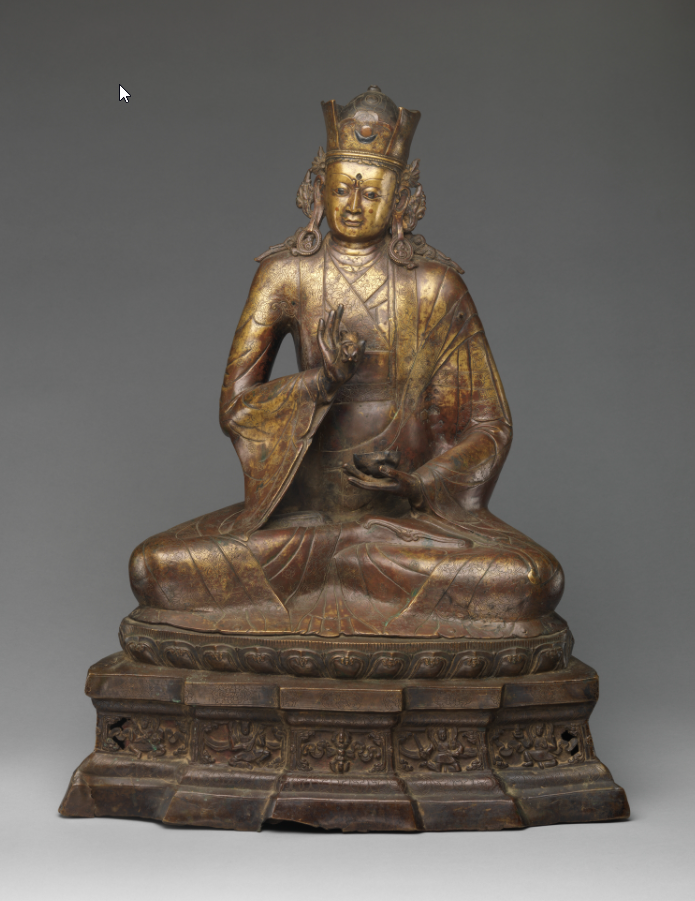
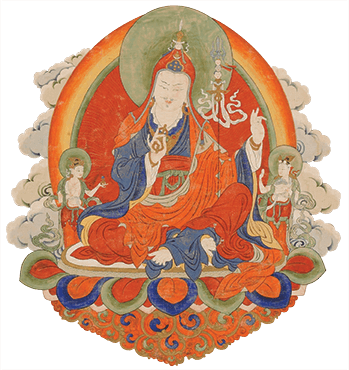
Padmasambhava (8th century), often known colloquially as Guru Rinpoche (precious teacher), is a central Tibetan Buddhist figure specifically in the Nyingma, or Old Tradition of Tibetan Buddhism. According to some of the earliest Tibetan literature, Guru Rinpoche is described as a tantric adept that brought Vajrayana Buddhism to Tibet from India in the 8th century. There are countless terma (treasure texts) attributed to him and his spiritual counterpart, Yeshe Tsogyal. There are, in fact, few books in the Nyingma tradition where Guru Rinpoche is not a central figure.
A succinct introduction to the life of Guru Rinpoche can be found on The Treasury of Lives. In brief,
Padmasambhava was born amidst miraculous circumstances and grew up a prince in Oḍḍiyāna, in northwestern India. As a youth, the prince turns to tantric practice, and before long, the local people force his father, the king, to send him into exile. Padmasambhava then travels around India, receiving teachings and practicing in sacred charnel grounds. Eventually he arrives in Yanglesho, where he gathers the texts of Vajrakīla, ends a drought by defeating some troublesome local spirits, and gains realization. While in Nepal, he receives King Tri Songdetsen's invitation and proceeds to Tibet, where he battles a now much-expanded series of local Tibetan spirits, helps to establish Samye, and leaves while pronouncing many ominous prophecies regarding the future of Buddhism in Tibet.
Additionally, there is a lovely little biography of Guru Rinpoche found in White Lotus, a commentary on the Seven-Line Prayer by Mipham Rinpoche. Read the excerpt here or listen to it below (from the audiobook edition of White Lotus read by Wulstan Fletcher of the Padmakara Translation Group).
Below you'll find books about Guru Rinpoche's life and legend in addition to several treasure texts closely associated with him and his lineage.

$34.95 - Paperback
The story of Guru Rinpoche’s visit to Tibet and significant influence on its Buddhist history during the eighth and ninth centuries, recounted by four prominent Tibetan scholars.
This book recounts Guru Rinpoche’s historic visit to Tibet and explains his continuing significance to Buddhists. Through a series of historical texts written by prominent Tibetan Buddhist masters, this book recounts the life and legacy of Padmasambhava, The Lotus-Born, better known as Guru Rinpoche. Credited with transmitting Buddhism to Tibet in the 8th century CE during the last century of the Tibetan Empire, Guru Rinpoche fostered radical changes to Tibet, marking historic transformations in the country’s religious and political position. Having converted Tibet into a largely Buddhist society, Guru Rinpoche’s influence remains a central force in Tibetan identity and practice today.

$24.95 - Paperback
This fascinating book examines the life of Padmasambhava to illustrate the principle of "crazy wisdom."
From this profound point of view, spiritual practice does not provide comfortable answers to pain or confusion. On the contrary, painful emotions can be appreciated as a challenging opportunity for new discovery. In particular, Trungpa Rinpoche discusses meditation as a practical way to uncover one's own innate wisdom. He uses the model of the Eight Names (or aspects of manifestations) of Guru Rinpoche, and goes through each in detail. He also makes a strong case that those in the west need Padmasabhava as badly as the savage and uncultured Tibetans of the eighth century.

$21.95 - Hardcover
By Sherab Chodzin Kohn, illustrated by Thinley Dorji
Explore a fresh telling of the inspiring, mysterious, and magical life of the great master Padmasambhava—the Lotus-Born—who planted the seed of Buddhism in Tibet that is still blossoming today, beautifully illustrated for ages 10+.
Here, his magical life story is outlined in colorful and captivating detail, offering young readers a rare glimpse into his fierce adventures and battles that transformed Tibet, a land of malevolent spirits and wild folk, into a fertile ground for Buddhism. The rich and vibrant spiritual tradition that resulted in Tibet has thrived for over one thousand years. This timeless tale is sure to capture the imagination of future generations, just as the oral, theatrical, and written accounts of it have in the Himalayas for centuries.
The Seven-Line prayer to Guru Rinpoche is one of the most ubiquitous and important prayers for Tibetan Buddhists, performed across lineages and in particular the Nyingma tradition who commence nearly every practice with it and for which there are dedicated sadhanas based on it. Below are several of the books about it.
Visit our page dedicated to resources about the famed Seven Line Prayer

$49.95 - Hardcover
Translated by Padmakara Translation Group
By Jamgon Kongtrul Lodro Taye
A collection of texts and commentaries from the Nyingma tradition of Tibetan Buddhism on Dzogchen, or Great Perfection teachings, which introduce us to our most basic nature—the clear and pristine awareness that is the nature of the mind.
The second volume on the Nyingma tradition from the Treasury of Precious Instructions includes a selection of essential instructions from Guru Rinpoche in addition to select texts and commentary from prominent Nyingma masters such as Garab Dorje, Mañjuśrīmitra, Śrīsimha, Jñānasūtra, Longchen Rabjam, and Jamgon Kongtrul Lodrö Taye.

$22.95 - Hardcover
by Padmasambhava and Mipham Rinpoche
A Garland of Views presents both a concise commentary by the eighth-century Indian Buddhist master Padmasambhava on a chapter from the Guhyagarbha Tantra on the different Buddhist and non-Buddhist philosophical views, including the Great Perfection (Dzogchen), and an explicative commentary on Padmasambhava’s text by the nineteenth-century scholar Jamgön Mipham (1846–1912).
Padmasambhava’s text is a core text of the Nyingma tradition because it provides the basis for the system of nine vehicles (three sutra vehicles and six tantra vehicles) that subsequently became the accepted way of classifying the different Buddhist paths in the Nyingma tradition.

$21.95 - Paperback
A Practice of Padmasambhava presents two practical and compelling works related to a visualization and mantra practice of Padmasambhava.
This practice is based on the most important revelation of the renowned nineteenth-century treasure revealer Chokgyur Lingpa, Accomplishing the Guru's Mind: Dispeller of All Obstacles. These two works give an introduction to the preliminary trainings, outline the primary elements of visualization practice and mantra recitation, and supply a detailed explanation of the practice of Padmasambhava's wisdom aspect, Guru Vadisimha. Through practical step-by-step instructions on this deity, the reader is guided into the general world of tantric practice common to all of Tibetan Buddhism.

$29.95 - Paperback
By Jigme Lingpa
Translated by Georgios T. Halkias
Translated by Christina Partsalaki
The Copper-Colored Mountain is the pure land of Padmasambhava, the Indian master who brought Buddhism to Tibet.
One way in which Buddhist practitioners may be reborn in this pure land is by making aspiration prayers. This work includes a translation of one of the most famous of these aspiration prayers, composed by Jigme Lingpa, and the authors’ verse-by-verse analysis of it. Drawing on both traditional commentaries and contemporary scholarly texts, the authors show how Jigme Lingpa encodes many features of Tibetan Buddhist tantric practice in these verses, and thus they provide a feast of meaning for tantric practitioners.

$21.95 - Paperback
By Padmasambhava
Translated by Kennard Lipman
Translations of several short but important texts on Innermost Essence of the Dakini (Khadro Nyingtig).
These two teachings of Padmasambhava, The Fivefold Essential Instruction and A Section of Hidden Instruction, the Innermost Essence of the Dakini, are certainly of interest to the serious practitioner of the Vajrayana. They not only present well-known tantric teachings of channels (tsa), energy (lung), and potencies (tigle) in a clear and practical way, but they also offer us a unique Dzogchen perspective on them. In addition, they give us a glimpse into life on retreat with two of the greatest masters of Tibetan Buddhism, Padmasambhava and Yeshe Tsogyal.

$16.95 - Paperback
Translated by Francesca Fremantle
Translated by Chogyam Trungpa
Written by Guru Rinpoche, rediscovered as a terma by Karma Lingpa, and translated and introduced by Chögyam Trungpa and Francesca Freemantle, this work is traditionally read aloud to the dying to help them attain liberation—death and rebirth are seen as a process that provides an opportunity to recognize the true nature of mind. This translation of The Tibetan Book of the Dead emphasizes the practical advice that the book offers to the living. The insightful commentary by Chögyam Trungpa, written in clear, concise language, explains what the text teaches us about human psychology.

$24.95 - Paperback
Teaching the attainment of Buddhahood in a single lifetime, this text was written and concealed by Guru Padmasambhava in the eighth century and rediscovered six centuries later by Karma Lingpa. The commentary by the translator is based on the oral teachings of Namkhai Norbu Rinpoche and Lama Tharchin Rinpoche.

$29.95 - Paperback
The King, protector, and deity Gesar of Ling is intimately connected with Guru Rinpoche. In his Garland of Jewels, Mipham Rinpoche explains that "The lords of the three families are Manjushri, Avalokiteshvara, and Vajrapani; their magical manifestation is Guru Rinpoche; and his emanation is Gesar Norbu Dradul. As Gesar prayers often specify, the 'emanation of Padma and the three families, Great Lion Gesar." This work explains the connection in several sections.
Orgyen Tobgyal relates:
Basically, the deity Gesar doesn’t exist; he is simply Guru Rinpoche in the form of a drala—a form he takes to help raise the windhorse of sentient beings. Guru Rinpoche is also the embodiment of the enlightened qualities of all the buddhas. His enlightened activities are unfathomable, but a small fraction took place in the Land of Ling, 'the awe-inspiring Ma valley' in Kham—this is what it’s called in all the stories written about Gesar.
Born a princess in Tibet around 777 CE, Yeshe Tsogyal is known for revealing terma alongside Guru Rinpoche. Although she is often referred to as the consort of Guru Rinpoche, Yeshe Tsogyal was herself a great spiritual master. Alongside Guru Rinpoche, she revealed and sealed treasure texts for future tertons (treasure revealers) to discover in future times. More on terma below.
Terma, or treasure texts, are hidden teachings associated with Vajrayana and Tibetan Buddhism as well as the indigenous Bon tradition of Tibet. In the Nyingma school, there are two types of lineage including the kama (oral tradition) and the terma or revealed scripture lineage. It is believed that terma was originally taught and hidden or "sealed" away by Guru Rinpoche and Yeshe Tsogyal, in order to be discovered by a terton, or treasure revealer, at a particular time and place in history when the teachings are most needed. Below are a few examples of treasure texts associated with the Nyingma tradition.
We also encourage readers to explore the excellent series of books on Padmasambhava, Following in Your Footsteps, published by Rangjung Yeshe Publications.
